January 7, 2026
Climate Change Close to Home
Mynzo Team
5 min read

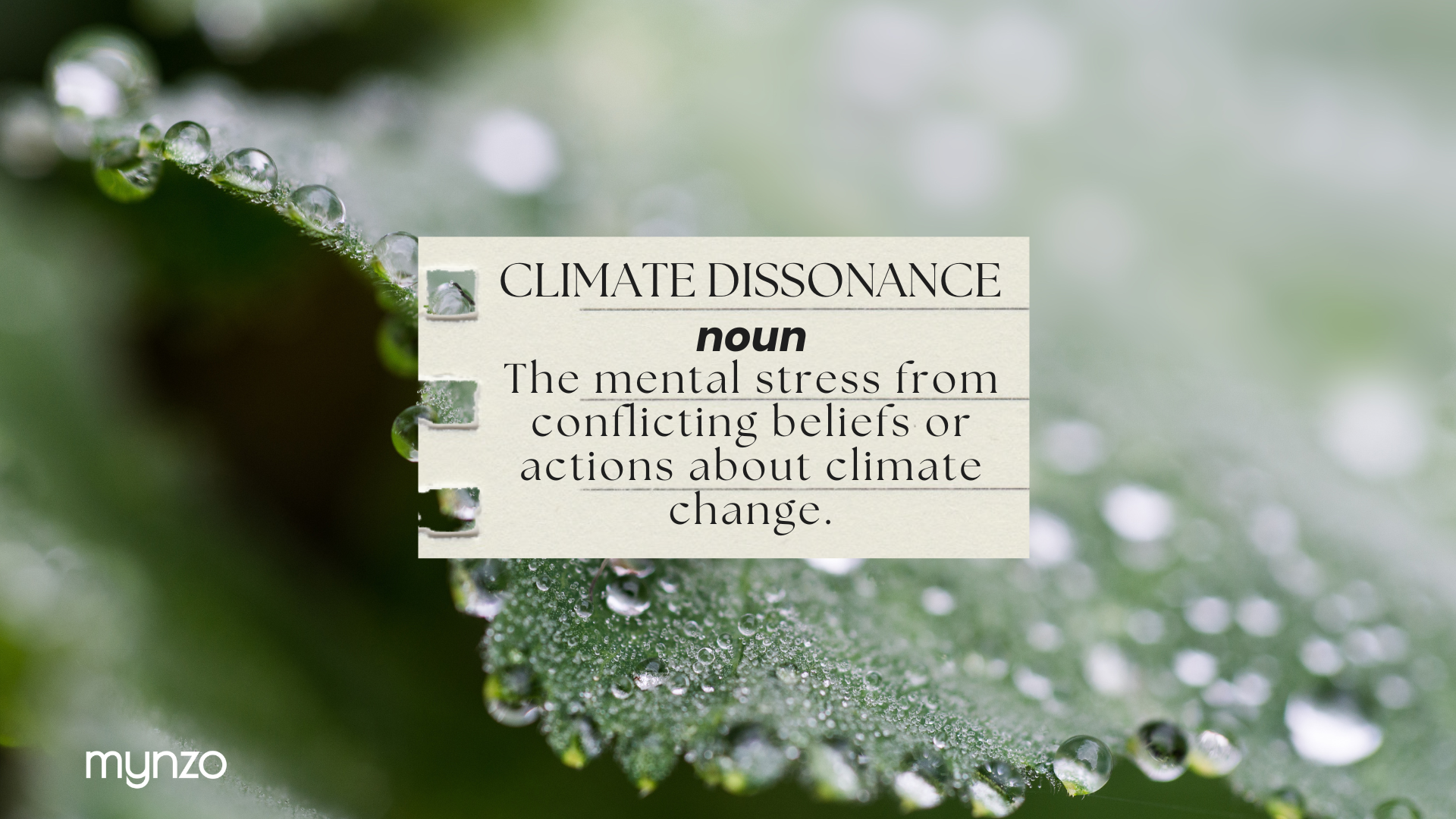
Climate change reshapes not just landscapes, but relationships, conversations, and shared futures.
Climate change is often described in planetary terms, with the use of language centered around rising temperatures, global targets and science. But its most persistent presence may be far closer, in family conversations that stall, friendships that grow tense and relationships quietly renegotiating the future that isn’t as predictable as it once was.
Many people first encounter the climate crisis not through catastrophe, but through disagreement. Perhaps one partner wants to stop flying, the other calls this impractical. A parent dismisses climate anxiety as an exaggeration while their child experiences it as an existential crisis. Friends grow wary of inviting “that person” who brings up emissions or ethics. Even at work, climate becomes an unspoken fault line.
These fractures reveal something uncomfortable: climate change is not just an environmental problem, but a relational one. It forces questions relationships are rarely built to answer.
Psychologists note that people process climate threat unevenly. Some respond with activism, others with denial. These are emotional coping mechanisms.
Romantic relationships feel this pressure acutely. Decisions about children, housing, careers, and mobility are now entangled with climate risk.
Families become sites of negotiation between generations. These tensions are not resolved by data alone.
Still, there is room for hope. Relationships can become spaces where climate concern is shared rather than siloed.
If climate change is reshaping the future, it is also reshaping how we relate to one another. Learning to face it together may be the only way forward.